The Great Escape: How Luxury Hotels are Breaking Free from OTA Chains in 2026
OTAs still take up to 25% commission and guard the guest data that matters most. Here's how independent luxury hotels are reclaiming both in 2026.
The “Hidden Tax” on Paradise
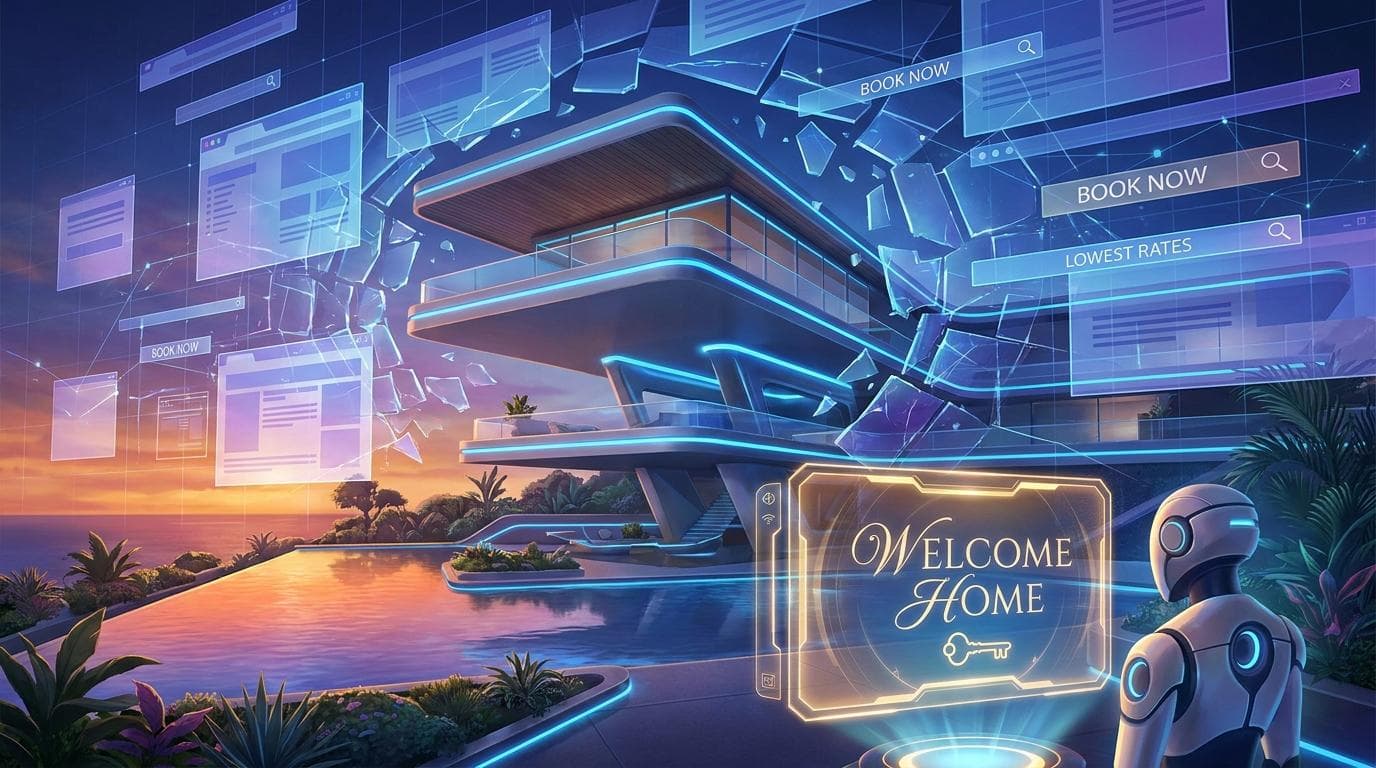
Consider the modern transaction of paradise: a guest pays $1,000 for a single night in a sweeping, ocean-view suite, believing they are investing in the architecture, the service, and the atmosphere. Yet, in the silent background of this exchange, the hotel is quietly handing over $250 of that sum to a server farm in a completely different time zone. Online Travel Agencies (OTAs) have long served as the ultimate “frenemies” of the luxury hospitality world. They are undeniable engines of visibility, bringing guests to the threshold, but they exact a staggering toll—a 15% to 25% commission—while deliberately hoarding the most valuable currency of our era: the guest's data. But the tide of 2026 has brought a profound shift. Independent luxury hotels are no longer content to merely exist within the algorithms of others; they are fighting back to reclaim their profit margins and, more importantly, the authenticity of their guest relationships.
How the “Billboard” Became a “Gatekeeper”
To understand the present, we must observe the architecture of our past compromises. In the good old days, spanning from roughly 2010 to 2019, the industry enjoyed what was affectionately known as the “Billboard Effect.” A guest might discover a boutique property on Expedia, but they would inevitably navigate to the hotel's actual website to seek out the “real” story—the uncensored photos and the nuanced descriptions. It was a passive, symbiotic partnership.
Then came the power move. Between 2020 and 2024, OTAs recognized the vulnerability of this model and poured billions into frictionless mobile apps and psychological lock-ins, such as the “Genius” loyalty tiers. They transformed the digital billboard into a walled garden, keeping guests safely locked within their ecosystems. Now, in the landscape of 2025 and 2026, we find ourselves facing the AI Wall. OTAs deploy Large Language Models to act as omniscient trip planners and primary concierges. The actual hotel brand—the creator of the lived experience—is pushed further into the background shadow, reduced to a mere supplier of square footage rather than a curator of memories.
The 7-Step Playbook for the Direct Revolution
Reclaiming autonomy in a digitized world requires more than just a functional booking engine; it requires the technology of intimacy. Independent hotels are executing a highly orchestrated playbook to drive the direct revolution:
- 1My AI Knows You: The digital foyer is now as perceptive as a seasoned maître d'. Agentic AI recognizes returning visitors instantly, dynamically reshaping the homepage to feature their favorite champagne, preferred room types, and tailored member pricing the moment they arrive.
- 2Join the Secret Club: The legal labyrinth of “Rate Parity” restricts public undercutting, so hotels have cultivated the “Closed-User Group.” By hiding exclusive discounts behind a simple login—marketed as “Founder's Rates” or “Insider Access”—they maintain an aura of luxury exclusivity while bypassing algorithmic price matching.
- 3More Than Just Free Fruit: The transactional perk of a free continental breakfast has lost its charm. Today's leverage relies on high-touch, “Direct-Only” flexes: guaranteed 4:00 PM late checkouts, seamless one-way VIP airport transfers, and priority access to the property's Michelin-star tables and spa sanctuaries.
- 4Keeping the Crown Jewels: True luxury requires an element of the unattainable. Properties are increasingly withholding their most premium inventory—the “Hero” suites, villas, and penthouses—from OTA screens entirely. To secure the crown jewels, one must step out of the aggregator and engage the hotel directly.
- 5The “One-Tap” Magic: The greatest weapon of the OTA was the saved credit card. Hotels have countered this by integrating Apple Pay, Google Pay, and biometric authentication like FaceID into their direct engines. It is now faster, and more instinctual, to book direct than to type “Booking.com.”
- 6See It, Tap It, Book It: The inspiration and transaction phases have collapsed into a single moment. Through high-definition, shoppable video on TikTok and Instagram, a guest can watch the sunset from a balcony and click a “Book Now” button that leads straight to a pre-populated checkout page, circumventing the search engine entirely.
- 7We Miss You (Literally): The art of anticipation has been digitized. Advanced CRMs analyze historical data to predict the precise moment a guest becomes “vacation-ready.” Before the guest even begins searching, the hotel slides a hyper-personalized, one-to-one offer into their WhatsApp, perfectly timed 14 to 30 days before their usual booking window.
The Drama in the Lobby
Yet, this reclaiming of digital territory is fraught with unseen drama. The industry is currently battling the “Wholesale Leakage” mess, a rogue ecosystem where bedbanks (like Hotelbeds) sell B2B inventory to mystery OTAs. These shadow websites then undercut the hotel's direct price, fracturing the brand's integrity and breeding guest distrust.
Equally damaging is the phenomenon of “Shadow” email ghosting. OTAs routinely mask guest communications behind aliases ([email protected]), deliberately severing the hotel's ability to send pre-arrival preference forms. It is an intentional blinding of the high-touch service that defines the luxury segment. And lurking beneath all of this is the pay-to-play trap. While base commissions remain stable, the true extortion lies in “visibility boosts”—auctions for top search spots that are driving the effective cost of an OTA booking perilously close to 30%. You either pay the toll, or you disappear.
What's Next: The Future of the Check-In
As we look toward 2027, the mechanics of the check-in are poised for another paradigm shift. Paradoxically, Google may be the white knight the industry needs. Its new Search Generative Experience (SGE) increasingly prioritizes “Free Booking Links” directly from hotels, provided the property supplies high-quality structured data. It offers a clean, direct path that circumvents the OTA entirely.
Concurrently, the Web3 philosophy of decentralized identity is finally finding practical application. We are moving toward a future where guests carry an encrypted “Travel Token”—a digital DNA of their pillow preferences, allergies, and wine affinities. They will share this token directly with the property, completely removing the middleman as the keeper of their desires. Furthermore, as our environments grow more attuned to our voices, the ultimate luxury is emerging in voice-first commerce. The race is on to ensure booking engines are compatible with the command: “Hey Siri, book my usual suite at Hotel Du Cap for August,” initiated seamlessly from a smart car or living room.
Closing Thoughts
When we examine the landscape of hospitality in 2026, a fundamental truth emerges: luxury is not a metric of thread count or square footage; it is the depth and authenticity of the connection. When a hotel outsources its guest relationship to a third-party algorithm, it fractures the very intimacy that makes a luxury experience meaningful. Breaking free from the OTA chains and cutting out the middleman is certainly a triumph for the balance sheet, but more profoundly, it is a restoration of hospitality's soul. By reclaiming the conversation, hotels are ensuring that the art of the welcome begins long before the guest ever steps through the door.